

How To Set Acetylene And Oxygen Gauges
The gases stored in the gas cylinders used for oxy-acetylene welding are originally at very loftier pressure, and cannot be directly used as such. Here, the oxygen and acetylene regulators play an of import function inreducing this pressure level to a working pressure. These regulators enable maintaining a constant desired force per unit area at the point of delivery, at a constant volume.
Oxy-acetylene regulators are thus acondom feature that comes fitted with all oxy-fuel gas welding equipment.
The regulator must therefore be of a reputed make because a low-quality regulator not only jeopardizes the quality of the work beingness performed merely also puts at risk the condom of the operator treatment the equipment.
The regulator not only reduces pressure but also enables regulation of the pressure by the welder during welding when the pressure of the gases falls afterwards connected usage of the gases.
The right oxygen acetylene regulators enable productivity in the job and ensure the safety of the operator.
In this commodity, we volition discuss what is the purpose of oxy-acetylene regulators, oxygen and acetylene gauges that come up fitted on the regulators, safe working pressures for both, individually – what should oxygen and acetylene regulators be set at, single-stage and two-stage oxygen regulators and, and a brief on the working of a single-stage oxygen regulator.
What Is The Purpose Of Acetylene And Oxygen Regulators?

Both the oxygen and acetylene regulator performs the following three functions:
- Reduce the pressure of the gas from the cylinder to a working pressure level that can be delivered at the point of application.
- Regulate the pressure level to be delivered to the signal of application, depending upon the need.
- Human action equally a safety device, regulators generally come with a cheque valve to prevent flashbacks between hose and regulators.
The pressure of the gases contained in the oxygen and acetylene cylinders is very loftier.
The pressure in the oxygen cylinder may be equally high as 2200 psi (15169 kPa). The working pressure of oxygen is effectually 1 psi to 25 psi (6.9 kPa to 172.four kPa). The regulator performs the function of reducing this pressure level from cylinder pressure to the working pressure. Likewise, the regulator on the acetylene cylinder reduces the force per unit area from cylinder pressure, which may be as high as 250 psi (1724 kPa), to a working pressure of 15 psi (103 kPa) maximum.
The regulators for LPG and acetylene are of unlike construction. So, regulator meant for one gas must not be used for another gas.
About regulators come equipped with a check valve between the regulator and the hose to foreclose any flashbacks through the regulator.
Nearly regulators in the market come in either a single stage type or two stage type.
Oxygen And Acetylene Gauges
Both kinds of regulators come up fitted with 2 force per unit area gauges each. What exercise the two pressure gauges on a regulator show?
The gauges for oxygen and acetylene regulators measure out two pressures:
First, at the inlet of the regulator, this shows the force per unit area in the gas cylinder. This is as well called the high-pressure gauge, and the amount of gas left in the cylinder tin be judged past the reading shown on this judge.
Second, at the outlet of the regulator, this shows the force per unit area in the hose that feeds the torch. This is also called the low-pressure gauge. The gas flow charge per unit to the torch is controlled by setting the desired outlet gas pressure level (which shows in this low-pressure level gauge) by adjusting the pressure adjusting screw of the regulator.
Safety Working Pressures For Oxygen And Acetylene
The required regulator pressure is dissimilar for the oxygen cylinder and acetylene cylinder, in oxy acetylene welding. Appropriately, the oxygen and acetylene regulator gauges are graduated for different ranges of pressures.
Oxygen regulators control and reduce the oxygen pressure from any the commercially supplied oxygen cylinder containing pressures upwardly to 3000 psi. The loftier-pressure level gauge, which is available on the inlet side of the regulator, is graduated from 0 to 3000 psi. The depression force per unit area gauge or the working pressure gauge, which is installed on the outlet side of the regulator, is graduated from 0 to 500 psi.
The working pressure of oxygen ranges from ten psi to twoscore psi, depending upon the type of flame required at the torch.
What Is The Maximum Safe Working Pressure For Acetylene?
Acetylene is an explosive gas at loftier pressures. It must not be used at pressures exceeding 15 psi (103.iv kPa).
The commercially used acetylene cylinders come with a cylinder pressure of 500 psi (3447.five kPa). It is the function of acetylene regulator to bring downwards the pressure from the cylinder pressure to the required pressure level.
The acetylene regulators are generally of same design as the oxygen regulators. But, they are not designed to withstand the high pressures that the oxygen regulator is designed to practise.
The high pressure level gage available on the inlet side of the regulator is graduated from 0 to 500 psi (3447.5 kPa). This gage indicates the force per unit area bachelor inside the acetylene cylinder.
The gage on the outlet side of the regulator, also called the depression pressure gage, is graduated from 0 to 30 psi (207 kPa). This gage shows the pressure of the gas in the hose leading to the welding torch. The maximum rubber working pressure for acetylene is 15 psi (103.4 kPa).
Single Stage Oxygen Regulators
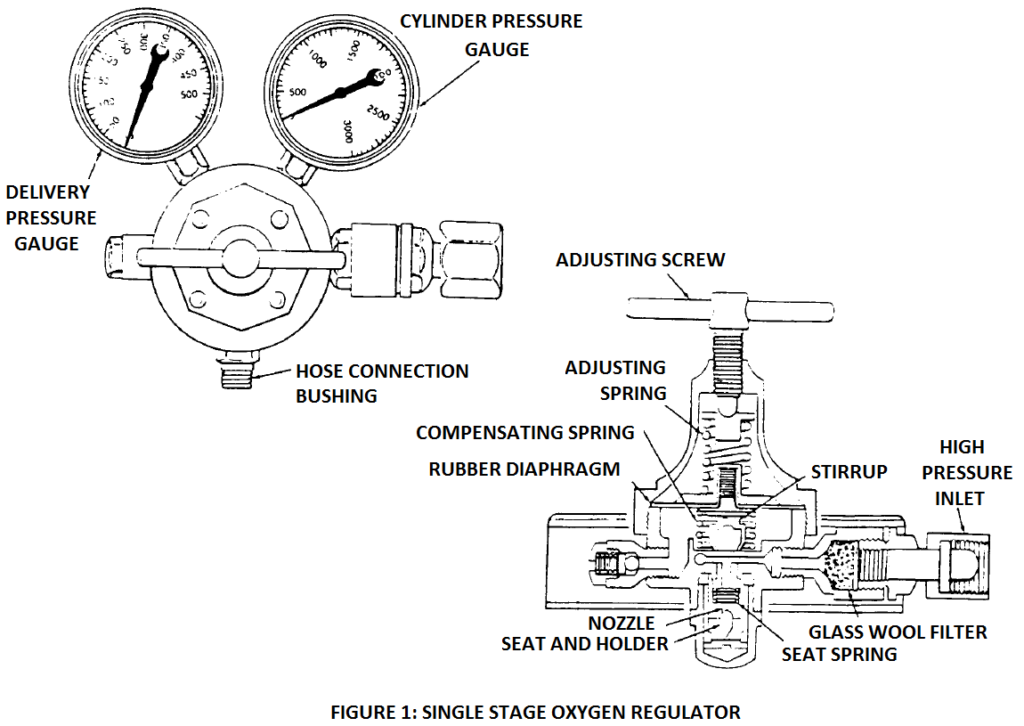
As the name indicates, in this kind of regulator – the pressure reduction from the cylinder pressure to the working pressure level occurs in a single stage. The mechanism of this regulator consists of a nozzle through which the high pressure gas passes, balancing springs, and a valve seat to close off the nozzle.
As gas is fatigued from the cylinder over the course of welding operation, the pressure in the cylinder falls, as does the pressure in hose (that is, the working pressure). The welder therefore must adjust the pressure periodically during welding, to maintain the desired charge per unit of flow.
Some regulators too come equipped with a inlet filter to filter out grit and dirt. The regulator comes mounted with 2 gages: one for indicating the pressure in the cylinder, another for indicating the pressure in the hose.
Operation Of Single Phase Oxygen Regulators
Refer the figure above, depicting a unmarried stage oxygen regulator. Equally can be seen, the regulator consists of a flexible diaphragm. The diaphragm controls the needle valve between the high pressure zone and the low pressure zone. The needle valve is exposed to the loftier gas pressure.
A compression spring and an adjusting spiral tin can also be seen in the figure; both these are on the contrary side of the needle valve – vented to the atmosphere. These recoup for the pressure level of the gas against the flexible diaphragm.
The oxygen entering the regulator through the loftier pressure inlet passes through the glass wool. The function of the drinking glass wool is to filter out the dust and clay. As pressure is practical on the adjusting screw, it bears down on the diaphragm and presses it against the compression leap. This raises the seat from the nozzle and opens the passage through the nozzle, and permits outflow of gas to the low pressure chamber.
The oxygen passes through the regulator outlet and enters the hose. The hose transports the gas from the regulator till the oxyacetylene welding torch, where information technology mixes with acetylene in the mixing chamber.
The pressure level in the low pressure bedroom is lower than the cylinder. This pressure level is indicated in the low pressure gage mounted on the regulator. It is this pressure that forces the gases through the orifices of the welding torch. This pressure level tin can be regulated by adjusting the adjusting screw.
The regulators which are used at the head of an oxygen or acetylene manifold have only cuff – that is, the low pressure gage. The gage on the oxygen regulator is graduated from 0 to 200 psi (1379 kPa), while that on the acetylene regulator is graduated from 0 to 15 psi (103 kPa).
Ii-Stage Oxygen Regulator
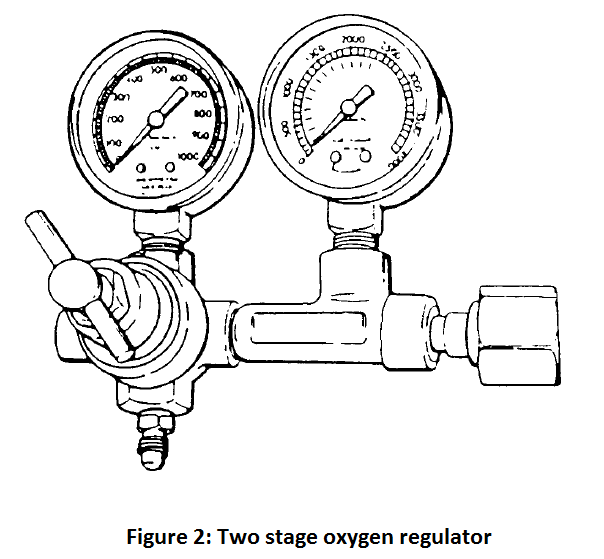
The two phase regulator is like to the single stage regulator, except that it obtains the reduction in pressure in 2 stages, instead of 1. The effigy below shows a two-stage oxygen regulator.
Outset, the pressure is reduced from the loftier cylinder pressure to the intermediate force per unit area. This is on the cylinder side of the regulator. Side by side, the pressure level is reduced from the intermediate pressure to the working force per unit area. This is on the torch side of the regulator.
The stage pressure helps in maintaining a constant working pressure, and periodic adjustment during the welding is not necessary.
This was all about oxygen and acetylene regulators. Please do leave your thoughts and observations in the comments beneath. If you would like to know more about the topic, hither is a good commodity on the web.
Planning to buy a new oxygen and acetylene regulator? Check out my recommended choice.

See Also:
- Oxyacetylene Welding Torch
- Setting upwardly Oxyacetylene Welding Equipment
Source: https://mewelding.com/oxygen-and-acetylene-regulators/
0 Response to "How To Set Acetylene And Oxygen Gauges"
Post a Comment